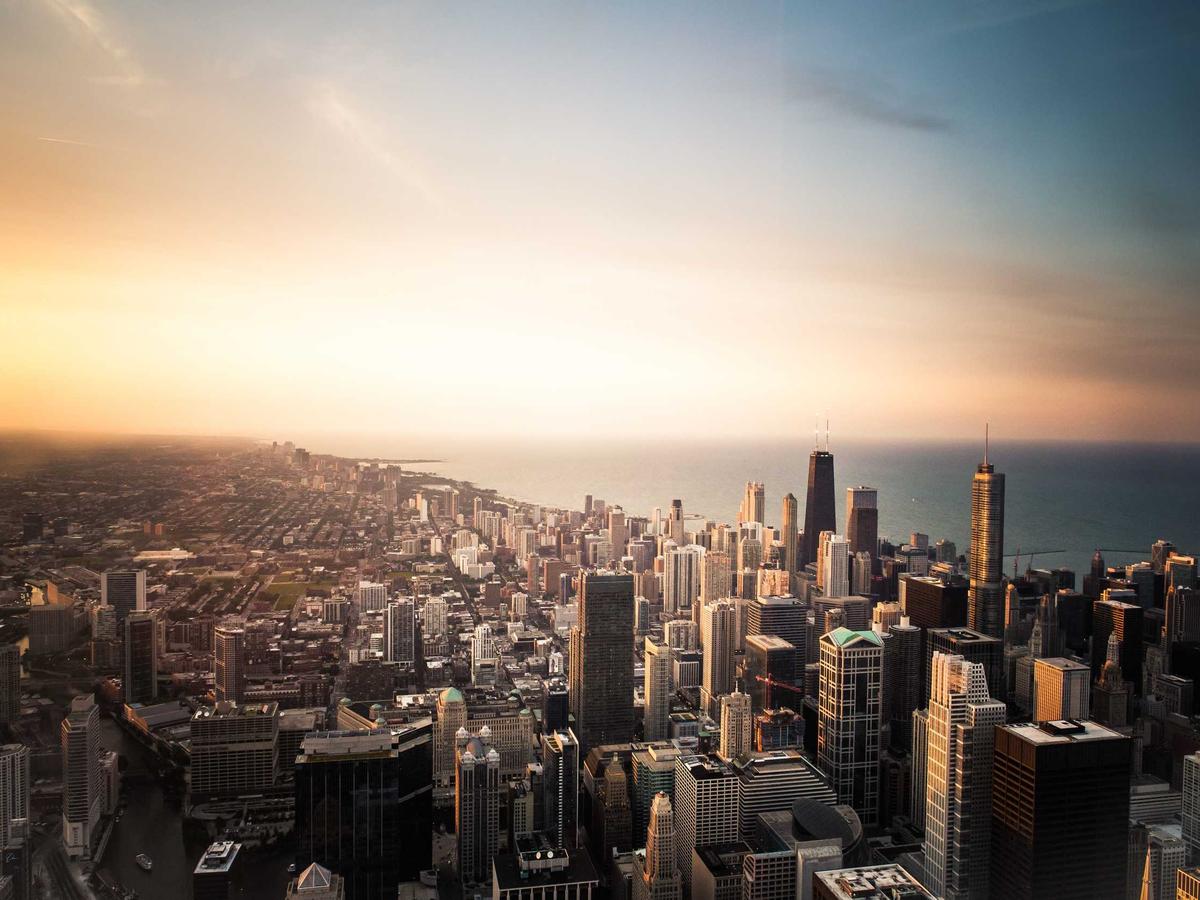

Orland Park-based Edwards Realty Co. has purchased Block 37, the long-troubled Loop shopping mall, for $30 million, with plans to revamp the consumer experience at the downtown Chicago property, an acquisition covered by the Chicago Sun-Times and followed closely by downtown retail watchers.
The four-story mall at State and Washington streets opened in 2009 after decades of failed redevelopment attempts on what is probably the most infamous development site in American urban history — the block east of Daley Plaza that has been called cursed, a fiasco and a boondoggle. For years the mall carried a vacancy rate near 70 percent, and its early years were marked by empty floors and churned-through tenants.
The block’s troubles date back generations. On the original 1830 map of Chicago, the parcel bounded by Randolph, Washington, Dearborn and State was designated Block 37, land platted for sale by New York speculators to fund the I&M Canal. Office buildings, theaters and a YMCA occupied the site through much of the 19th and 20th centuries, but in 1989, newly elected Mayor Richard M. Daley allowed the entire block to be razed — including the landmark McCarthy Building, a five-story structure built the year after the Great Chicago Fire — before a replacement was secured.
The site sat mostly empty for 20 years, masked by a little-patronized ice skating rink and an underfunded arts and crafts festival held in tents. Starting in 2005, the CTA poured nearly half a billion dollars into the block’s basement in an attempt to build a subterranean mega station tying the Red and Blue lines together; the project instead produced an expensive cavern that has largely sat unused.
Edwards Realty’s bet is that downtown Chicago’s recovery — record tourism, a revived Loop office market and rising street-level activity — can finally stabilize the property. The firm, which manages a portfolio of shopping centers across the Midwest, said it plans to rebrand the mall and reposition the retail mix toward experiential tenants. The purchase price of $30 million is a fraction of the hundreds of millions invested in the block over the decades, reflecting how deeply discounted the asset had become.
There have been modest successes on the block worth building around: CBS’s studios on the southern half, the popular restaurant The Dearborn on the northwest corner, and some offices and apartments. The CTA station cavern also remains a long-term option for future transit use, an asset no other Loop property can claim.
Real estate analysts say the purchase is a test of whether new ownership and lower basis can succeed where city-backed plans, corporate developers and mall operators all fell short. Downtown foot traffic has been climbing as return-to-office mandates and tourism recover, and State Street’s retail corridor has added new tenants in recent years, giving the mall a healthier environment than it has had since opening.
The acquisition also carries symbolic weight for downtown boosters who have watched the Block 37 saga as a proxy for Chicago’s ability to reinvent its core. The site’s history — cataloged in Ross Miller’s 1996 book “Here’s the Deal,” which chronicled years of lawsuits and protests over what he called a gold-plated hole in the ground — has made every new attempt a referendum on the city’s development ambitions.
Edwards Realty has not announced specific tenants or a timeline for the rebrand, but the company said improving the consumer experience is the priority. If the firm succeeds, it would close one of the strangest chapters in Chicago commercial real estate; if not, Block 37 will have claimed yet another owner. Either outcome will be closely watched by landlords and lenders across the Loop, where several large retail properties still carry pandemic-era debt.